Sunday, October 14, 2012

Questioning

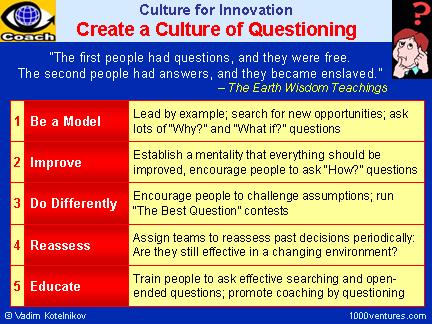
     Questions are very beneficial to the classroom because it helps the students discover how to find and analysis their answers. A teacher must make sure that he or she asks all of the different styles of questions such as literal, inferential, evaluative, analysis, and comprehensive. If different styles of questions are used in the classroom, it encourages the students to think outside the box and to analysis the text. Through questioning, students are able to recall and comprehend the text better. Should a teacher include all the styles of questions in every review of a text?   There are several strategies used to promote questioning in the classroom such as question the author, question-answer relationship, and SQ3R.
     Question-Answer Strategy helps students to explore four different types of questions. It helps them to be more hands on with the text by classifying questions and locating the answers.This strategy encourages the student to a critical thinker because some of the answers are not found in the book.This strategy helps the students expand their knowledge  of different types of questions as readers,thinkers,and learners. 
     The strategy I like the best would be the survey, question, read, recite, and review (SQ3R) because it teaches students to formulate their own questions and to help the students become familiar with the text. Another strategy that would be good to use while teaching Math word problems would be SQRQCQ. I have never heard of this strategy before but as I read I see that it would help the students understand the problems better and also help to make connections from what they already know. Could any of the questioning strategies be used as note taking strategies? Any strategy used in the classroom will have a major impact on the students' engagement and comprehension. 


Sunday, October 7, 2012

Note-taking

     This chapter was very interesting because I did not realize that note taking was that important. As I read, I discovered that note taking does help the student pay attention and keep track of the important facts during the lecture. Also, I did not realize that there was several different styles of taking notes. I was only use to outline style or my own style of taking notes which is making sure I get the key terms and concepts and leaving enough space for extra notes.
     One of the procedures I will use in my classroom to create successful note takers would be the Cornell style which helps the students organize their notes. This style helps the students divide the big ideas from the details and then they would summarize it at the bottom of the paper. I believe this style is a great way to help the students actually comprehend the text and lecture. I will make sure I show students several ways to take notes so they will be prepared for their future classes.
     To help students stay on track with the lecture, I will remind students that what I am saying might be on the test. I will also use a strategy such as KWL to help me create a classroom of successful note takers. In the strategy KWL, the students have to write down what they know about the topic, what they want to learn, and then what they have learned about the topic after the lecture. This strategy will help the students get involved in the lecture and comprehend it better.Note taking was never encouraged when I was younger but I know that I will encourage my students to take good notes which in turn will help them become better learners.


Sunday, September 30, 2012

Vocabulary Acquisition and Comprehension

Read alouds are very effective in students learning new words and comprehending the text. Read alouds help engage students in the text and generate more questions prior to the text. As a future teacher, I think read alouds are very important because it brings the text to life for the students. From the reading, teachers have different read aloud styles which are interactional, performance, and just reading. Interactional and performance read aloud styles are more effective in vocabulary acquistion and comprehension.
I can see how interactional and performance read aloud styles  are more effective because they actually get students involved in the reading and they make the students think more critically on the story. Does an effective teacher use a read aloud on every narrative text he or she reads? The just-reading style does not allow the students to think outside the box or interact with other students' feedback to the story. As the students get older, they might comprehend the text better by just reading to themselves. I know that the just reading style would be a lot easier for a teacher to perform but to increase the students vocabulary and comprehension skills a teacher must make reading fun and engaging.
Even though interactional and performance styles are more effective, theses styles might not help some students that are on a different cognitive level. So the teacher needs to be prepared to used a different strategy or text for certain students. So can the teacher use  read aloud styles for expository text or does it work best only for narrative text? Using the read aloud styles, narrative text seem to be easier to teach because the text is more informative and entertaining to the student. I gained from the reading that getting the students involved and engaged in the narrative text will broaden students' vocabulary and comprehension.

Sunday, September 16, 2012

Read Alouds in the classrooms

       Teachers should use read alouds and shared reading as much as possible in the classroom, because it helps the students understand the content better. Both of these strategies, the teachers does the reading not the students.Using both of these strategies, the students get to see how the teacher uses expression while reading. Read alouds and shared readings help the students to hear a variety of complex texts that they might not would read on a regular basis. Which strategy is the best strategy for comprehension?
       Read alouds and shared readings are similar in that they engage the students and help with comprehension. They are different in that read alouds increase critical thinking skills while shared reading familiarizes the students with the text. Read alouds help make more meaningful connections with the text and can also be used to introduce a new topic. Even as the students get older like middle school, teachers should continue to use read alouds to increase students' comprehension and reinforce content.
       Meanwhile, shared readings are used for teachers to model prosody of the text and to increase interaction with the text. By interacting with the text, students learn how to interpret and understand the text. When does a teacher need to stop using shared readings in the classroom? Shared readings are great way to let the students know what is going on inside the head of a fluent reader. Since read alouds and shared readings are motivating strategies, they need to be used not only in English but also in other subjects such as Math, Science, Social Studies, and other electives to help engage the students in the material.

Saturday, September 1, 2012

Writing to learn

     While learning to write is essential to encoding words and understanding grammar, writing to learn encourages the students to recall and connect ideas to what they know about the subject. I agree with several of the instructional strategies such as quick writes, framed paragraphs, and biopoems  because it helps to clarify students thinking on the content of the subject. These strategies are great ways for students to analyze topics, give opinions, and increase their writing confidence. The strategy that stuck out the most would be ABC list because the students have to think critically on the word that would best fit the subject matter.
     Teachers should promote writing to learn in the classroom because it affects the students achievement levels in different subjects. Writing to learn such as note taking and generative sentences help students comprehend what they are reading and listening to in the class. When things are written in their own words, students understand the material a lot better. Even though I do not like being timed to complete anything, I like the power writing strategy because it assesses the students on what they know on a given topic in a short amount of time. It gives the students an opportunity to write their own understanding of the topic. Why does the book Improving Adolescent Literacy and the article Writing to learn across the curriculum not mention how technology would be a creative way to promote writing to learn? In today's society, there is an increase in technology such as Facebook, twitter, blogs, and text messaging so teachers should utilize it to encourage students to write.
     Technology and writing can be used in different subjects not just English. By encouraging students to write more in different subjects, it helps the students become more familiar in different styles of writing such as solving a math problem in words or getting students to write out directions to their favorite recipe in their home economics class. The RAFT strategy would be a great way to get students in a daily routine of writing. It would also prepare students on what to expect when trying to write on a topic. Why does the book or article not emphasis how important it is to start using and encouraging these strategies at a young age such as kindergarten? The younger the students are the easier it will be to motivate and to establish that writing is an important learning tool to understand different topics.